← Back to work
Case Study · Mobile App · Individual

Dr. Cat

A 24/7 pet telemedicine platform for emergency veterinary consultations.

Ask any question about your cat — anytime, anywhere.

Visit prototype →
Role
UX / UI Designer
Duration
8 weeks · Individual
Platform
Mobile App

Background

Dr. Cat is a telemedicine platform that gives cat owners immediate access to licensed veterinarians during emergencies — especially at night and on weekends, when traditional vet clinics are closed.

It addresses a critical need: timely consultations that can mean the difference between life and death for a cat, while easing the anxiety of owners facing an emergency.

RoleUX / UI Designer
Duration8 weeks
TeamIndividual project
ToolsFigma · Miro · Interviews
PlatformMobile App
Dr. Cat — Cat Health Expert hero visual
The Problem

Cat owners struggle to get immediate help at night and on weekends, leading to anxiety, delayed treatment, and potentially life-threatening situations.

Research & User Understanding

To understand the real needs of cat owners, I combined a quantitative survey with qualitative interviews, mapping both behavior and emotion when a pet emergency strikes.

Quantitative survey results on emergency timing
Key data, when help is needed
  • 81.1% of cat owners said they need urgent help at night or on weekends, when most clinics are closed.
  • Information overload, owners spend the first critical minutes scrolling conflicting forum advice instead of acting.
  • The emotional state during an emergency is panic and isolation, not just lack of information.

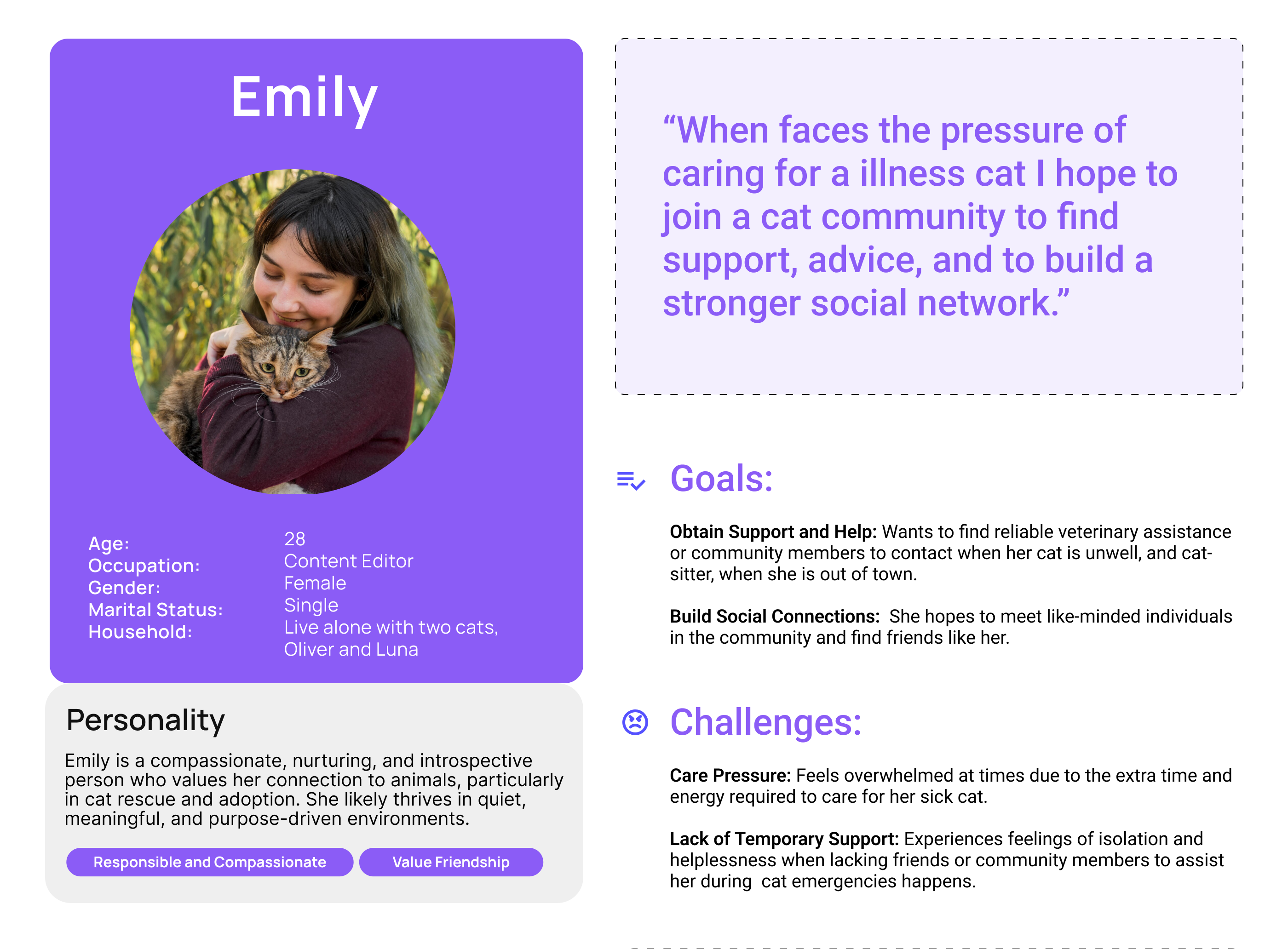
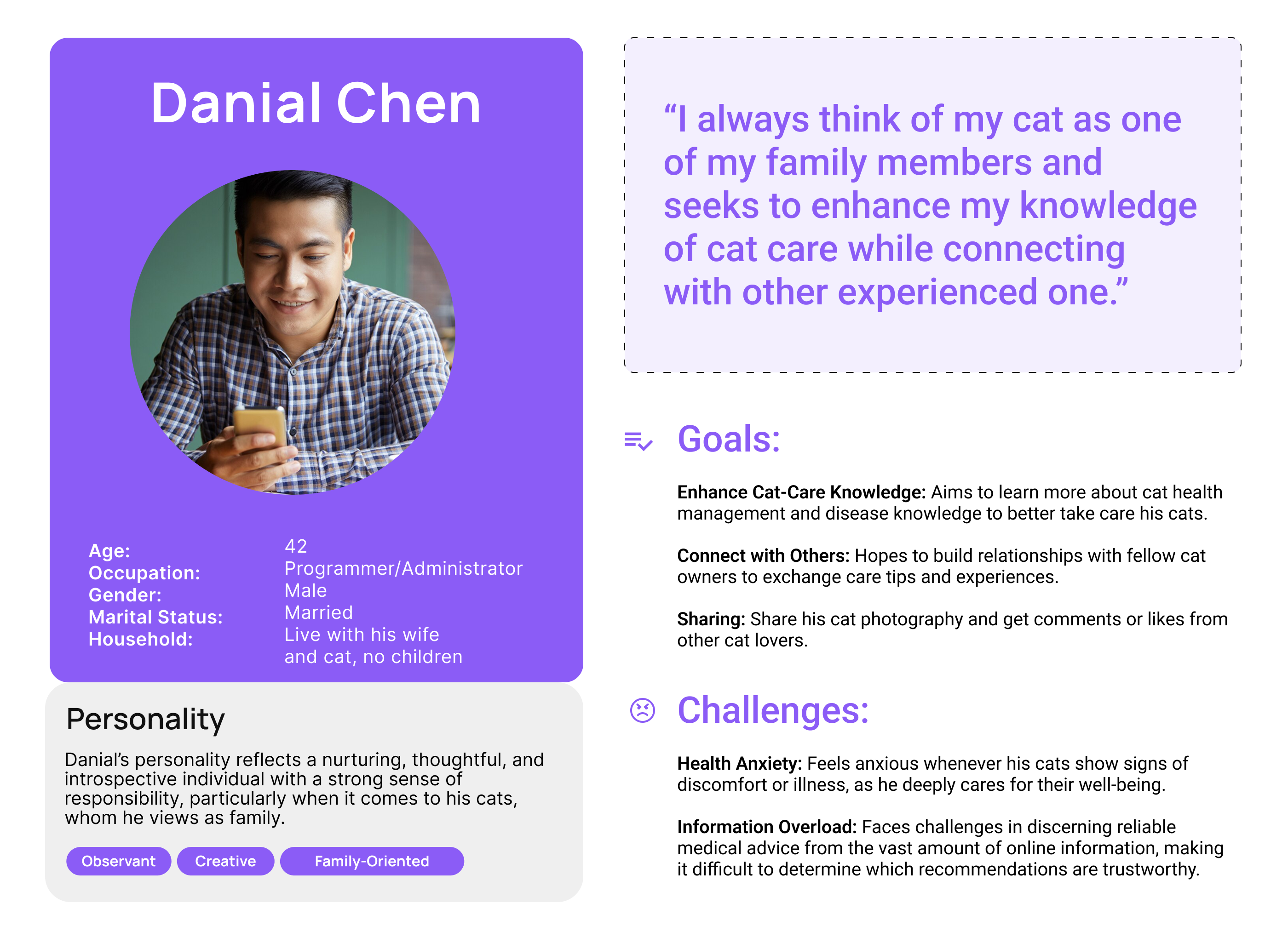
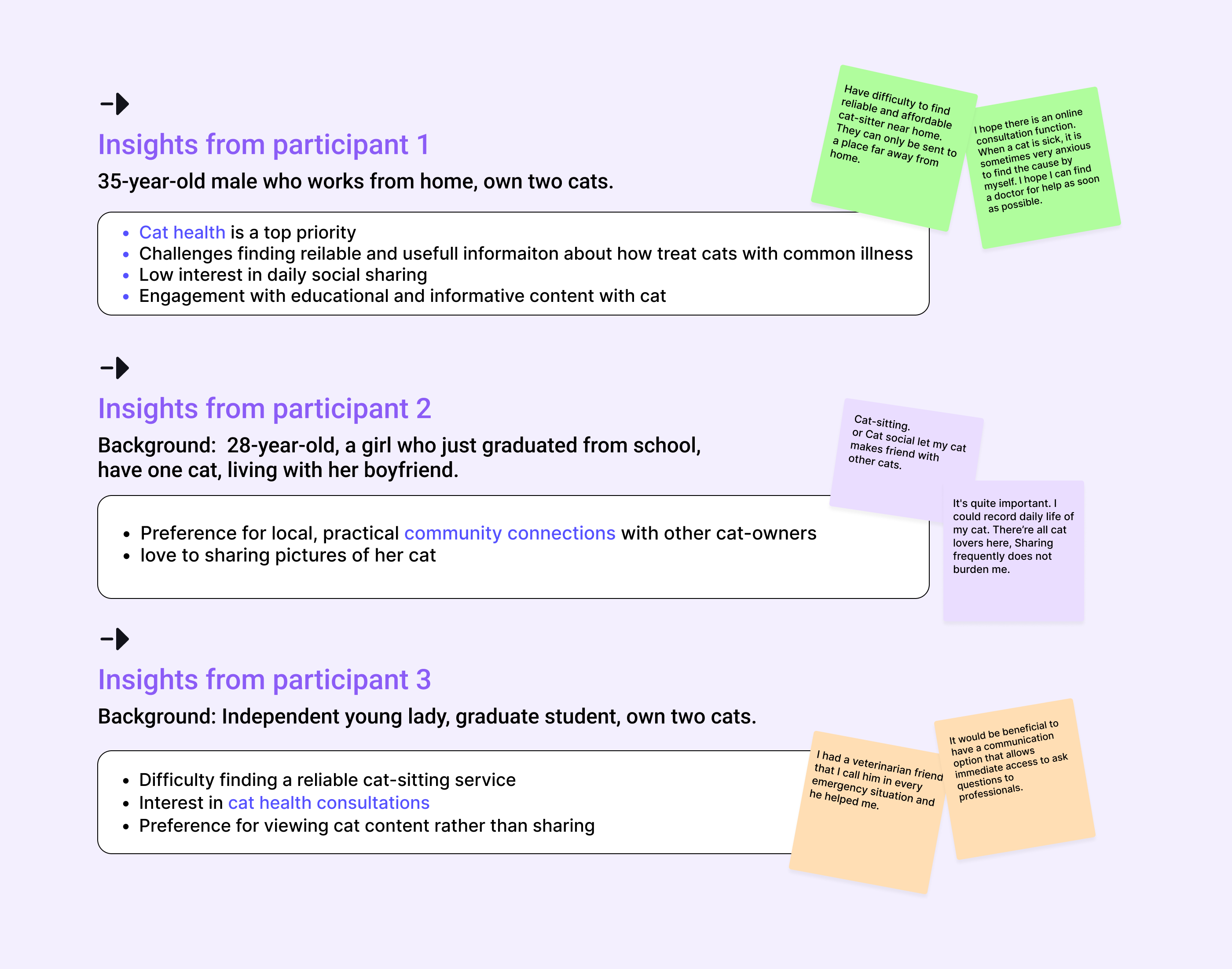
Personas — Who I'm Designing For

Two personas surfaced from research: one driven by emotional support and community, the other by reliable information and cat-care knowledge.

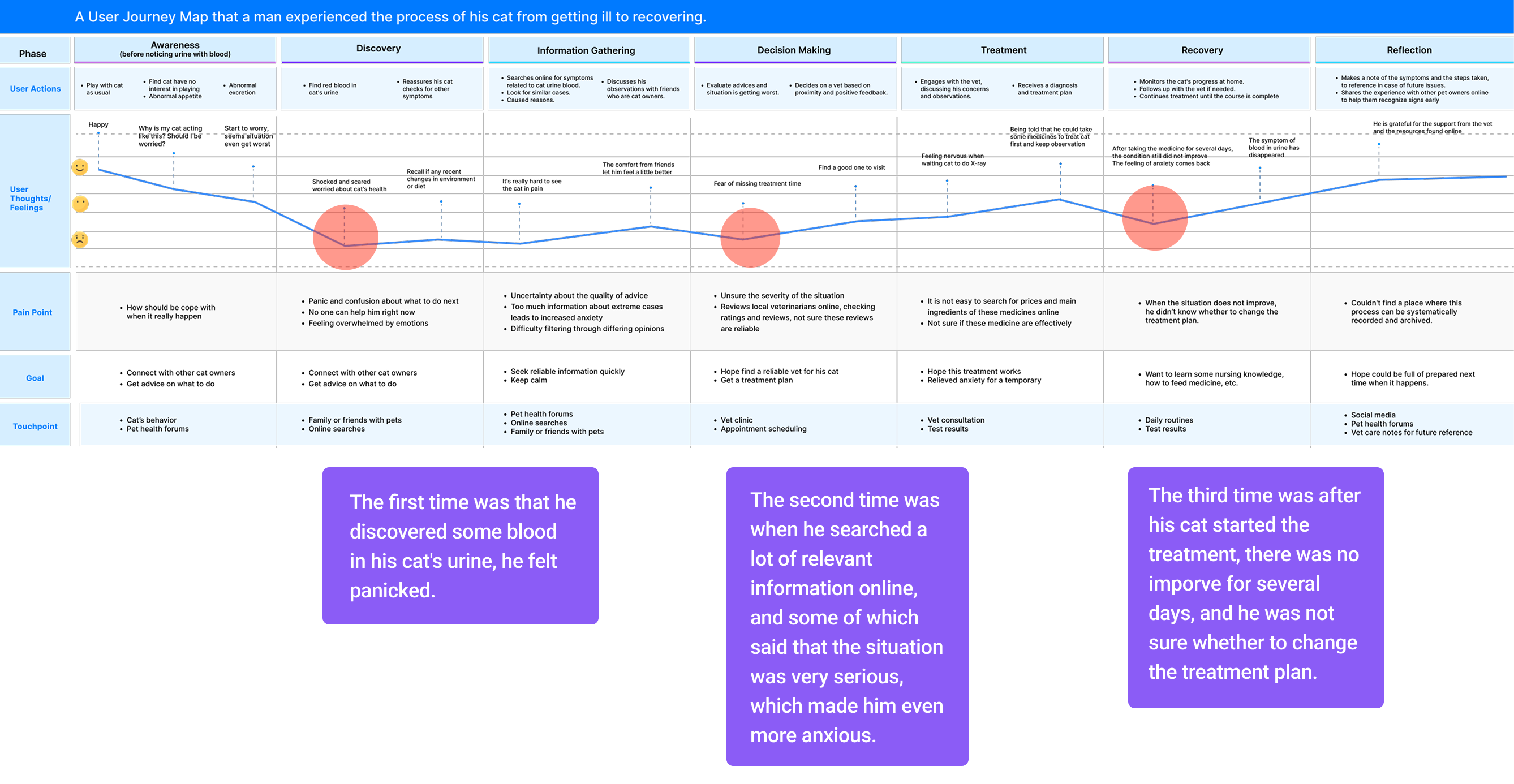
User Journey Map

Mapping the emotional arc of an emergency revealed where users feel most lost, and where a timely intervention can change the outcome.

User journey map showing emotional arc during a pet emergency
Journey map

Key Pain Points

01

Panic and confusion about what to do when symptoms first appear.

02

Overwhelming and conflicting information from online searches.

03

No veterinary support available during nights and weekends.

04

Feeling isolated and anxious without professional guidance.

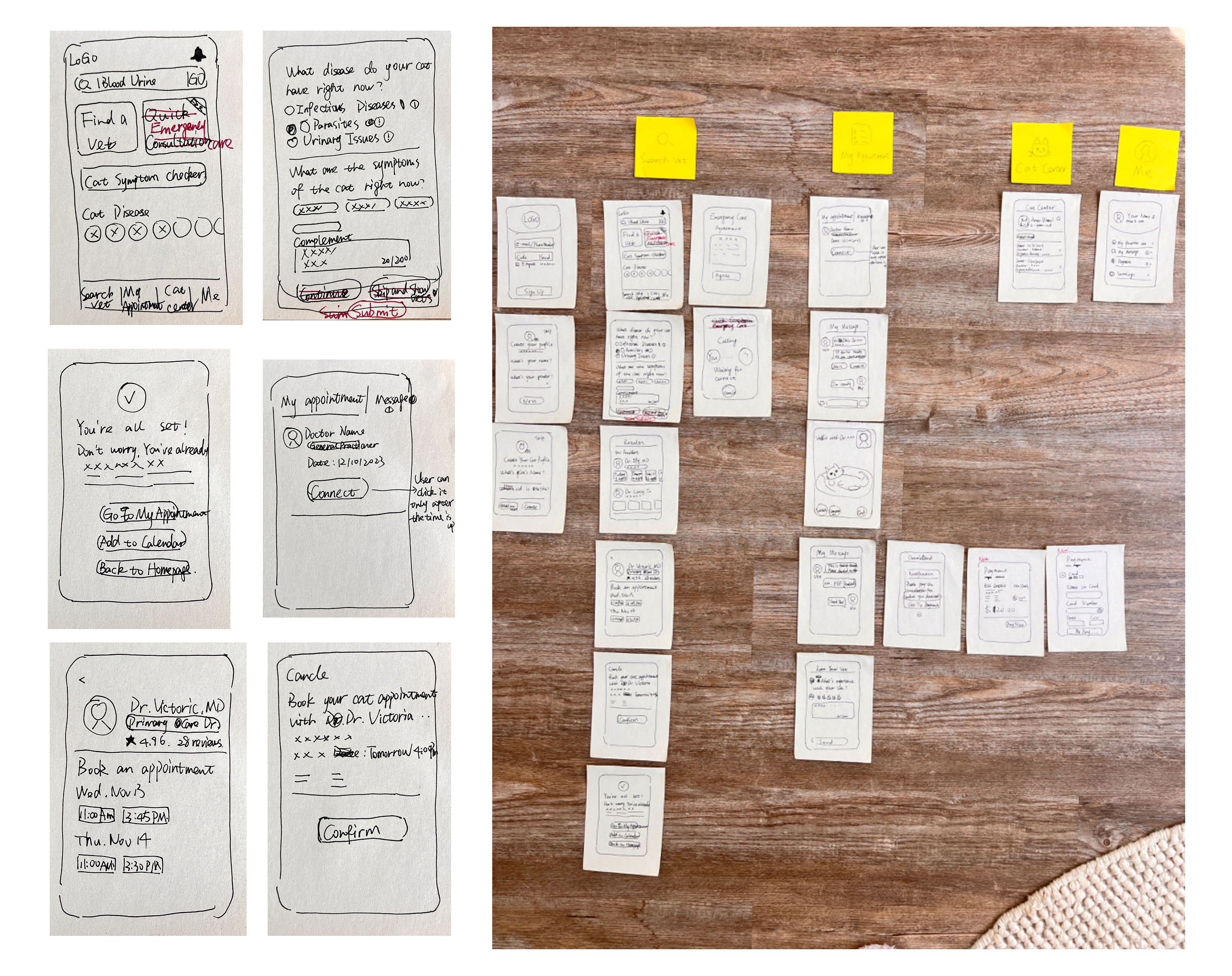
Solution & Iteration

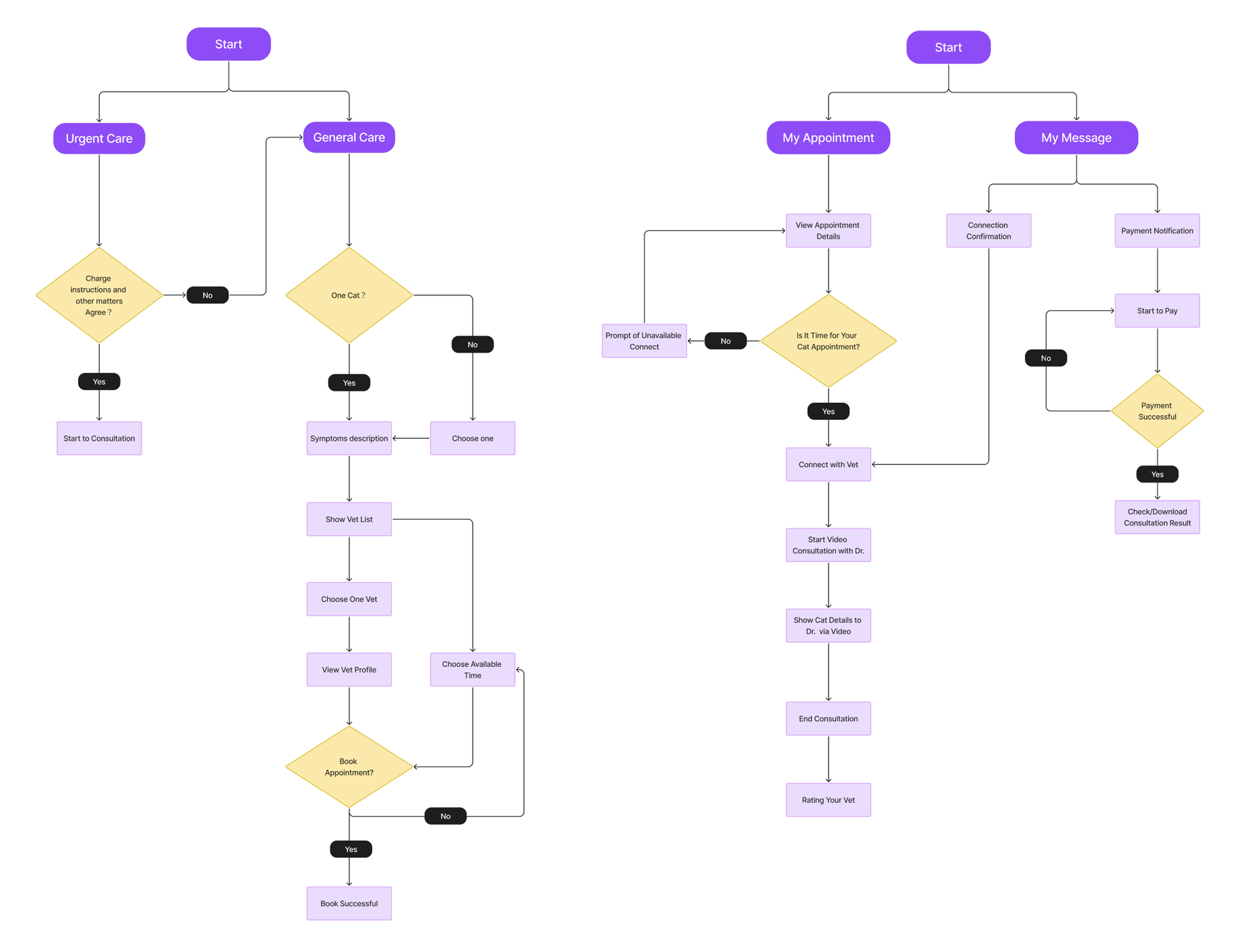
These two decisions emerged from testing with 3 interviewees, designing for emergencies meant making business trade-offs.

Decision 1 · Urgent Care flow

Before
  • Standard flow: browse vets, compare ratings, book a slot, then get help.
  • Choosing a vet at the moment of panic adds 4 extra steps before any reassurance is given.
After
  • Removed vet selection entirely for Urgent Care. The system assigns the next available licensed vet; consultation starts in one tap.
  • Trade-off: users lose the ability to choose. But in an emergency, choice is friction, and trust comes from speed.

Decision 2 · Charge transparency

Before
  • Standard flow: pricing is surfaced inside booking, or quietly after the consultation begins.
  • Surprise charges are a leading reason users abandon telemedicine platforms after one use.
After
  • Added a brief charge & expectation screen before Urgent Care starts. Users see the rate, what's included, and what's not, before they connect.
  • Trade-off: one extra screen at a stressful moment. But hiding cost in a paid emergency service erodes long-term trust.

Key Features

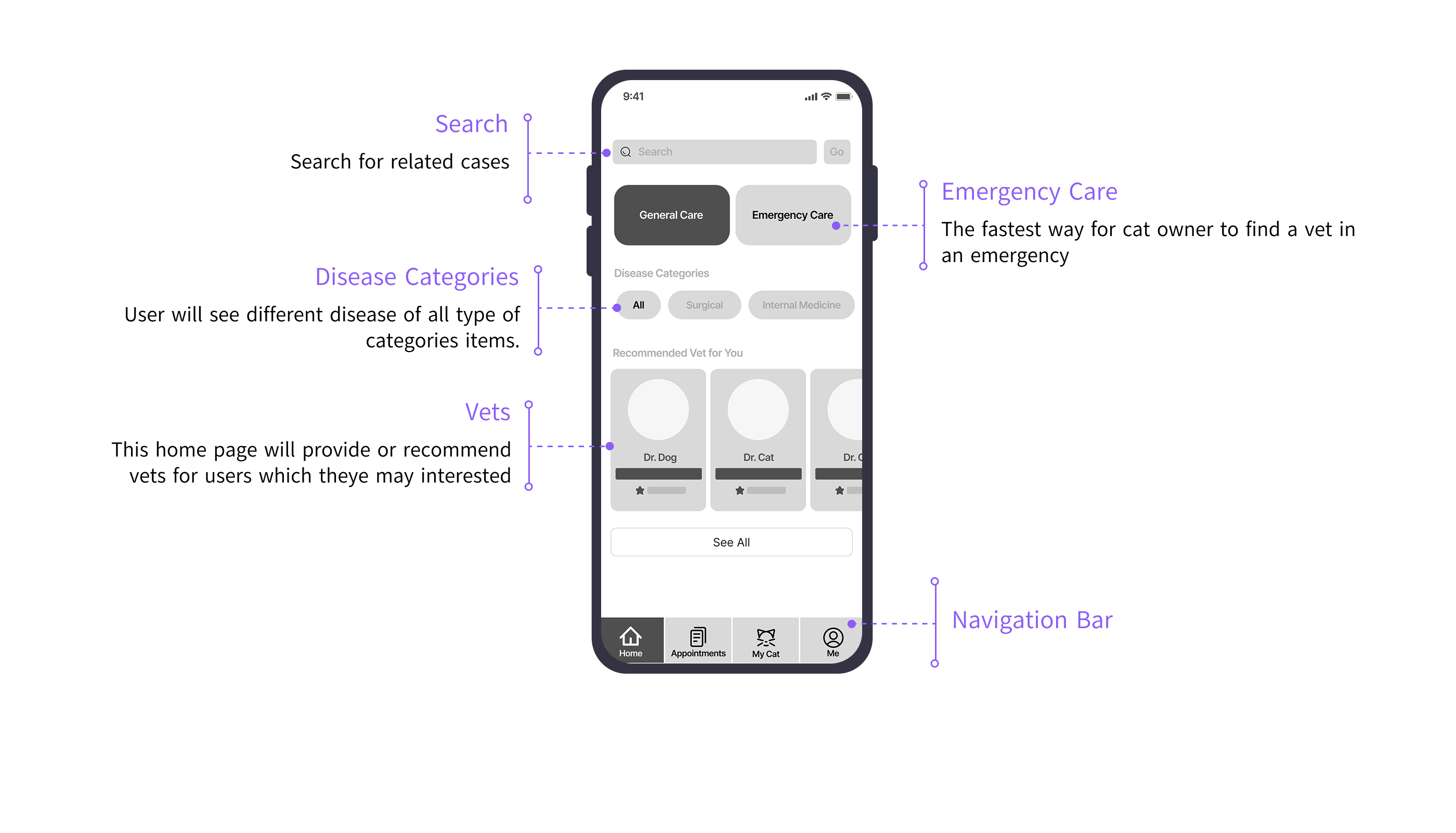
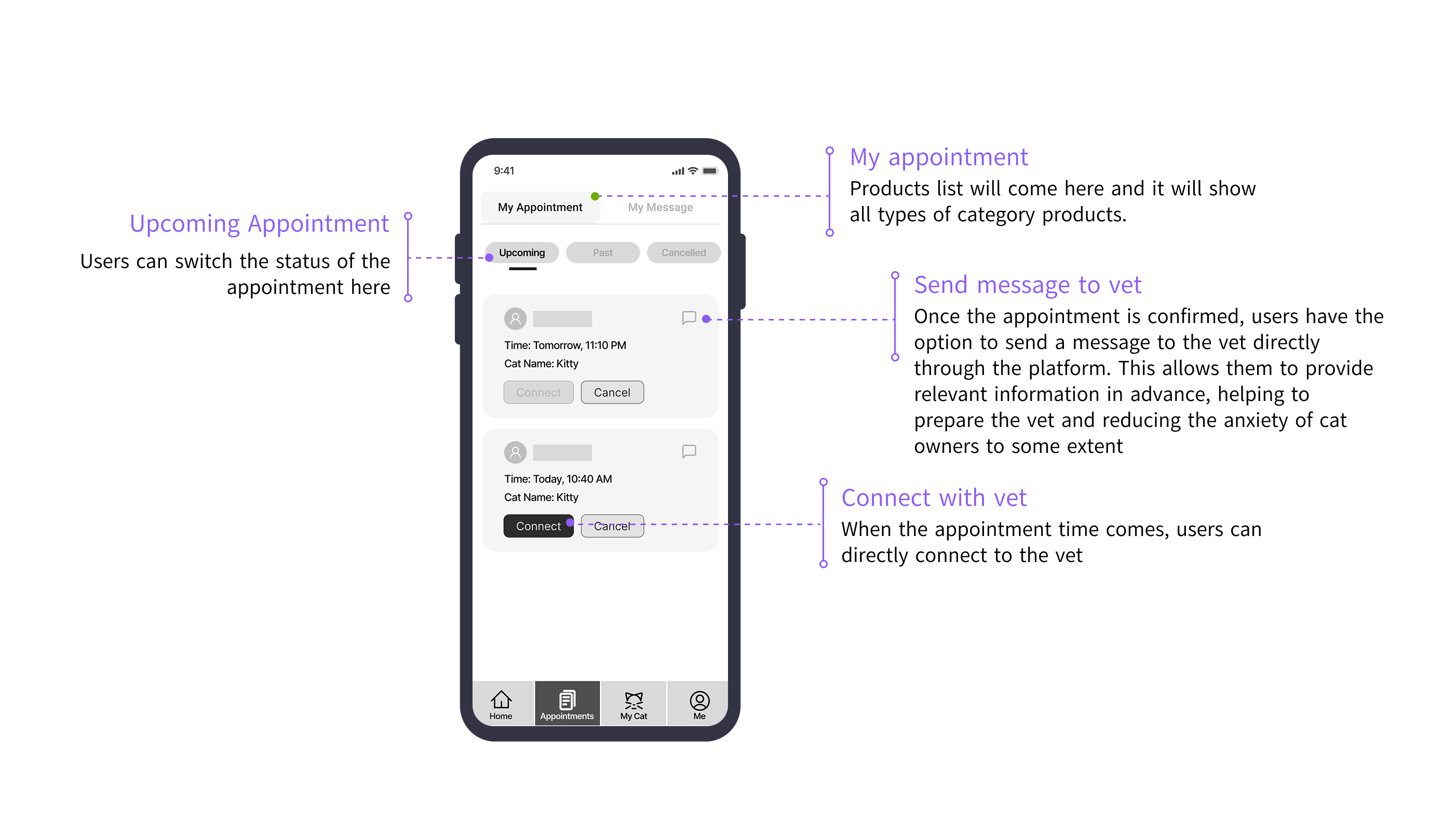
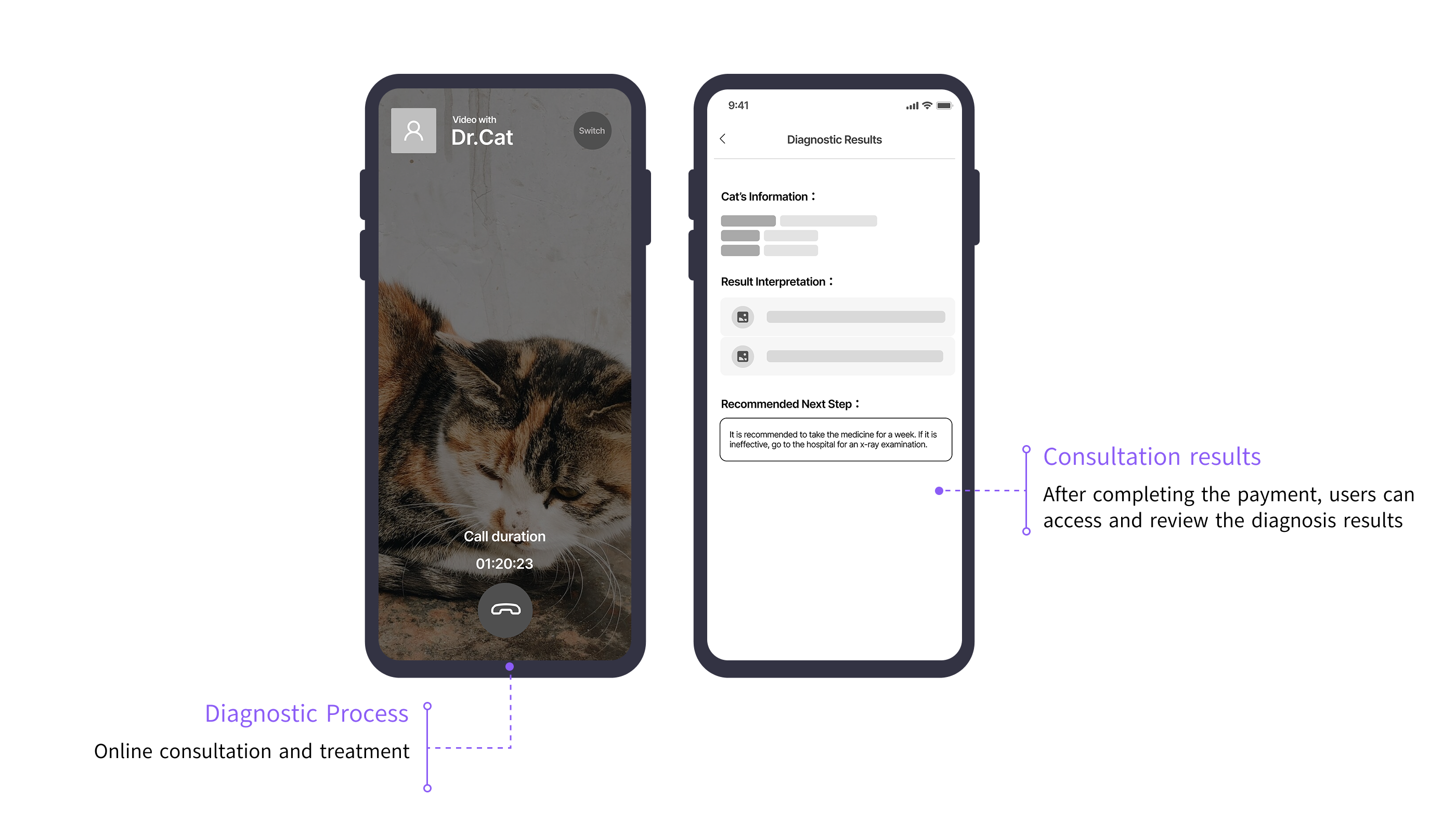
The final design centers on three key moments in the emergency journey: finding a vet, managing the appointment, and receiving a clear diagnosis, all built for one-handed use under stress.

Reflection

This project began from my own experience as a cat owner.

I set out to see whether a simple platform could reduce the stress of seeking care in an emergency. The research clarified users' goals and surfaced real pain points — though its scope and depth were limited, and I'd want to test with a larger, more diverse group in a next round.

Two illustrated cats with a heart — closing illustration

What's Next

The next version of Dr. Cat shifts from a content platform to a community-driven help network. Experienced cat owners volunteer to support newcomers one-on-one, turning everyday expertise into real, trusted guidance, and a self-sustaining loop.

1

Ask

A new owner posts a question publicly or reaches out privately for help.

2

Answer

An experienced owner sees it and offers one-on-one guidance.

3

Rate

The newcomer rates how helpful the answer was.

4

Tip

They can leave a small voluntary tip as thanks.

↻  Recognition and rewards motivate helpers to stay, keeping the loop running.

Over time, newcomers grow into veterans who help the next wave of beginners. This spirit of mutual support is what turns a feature into a culture.